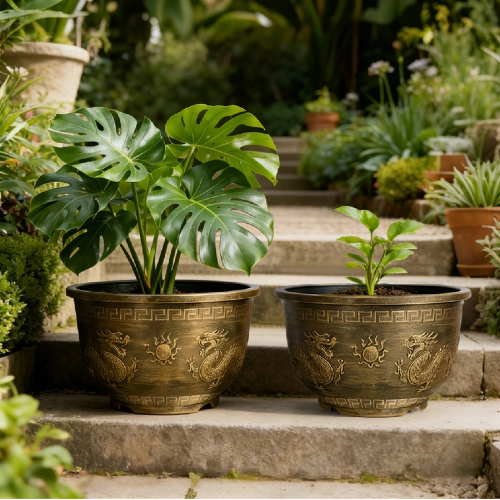
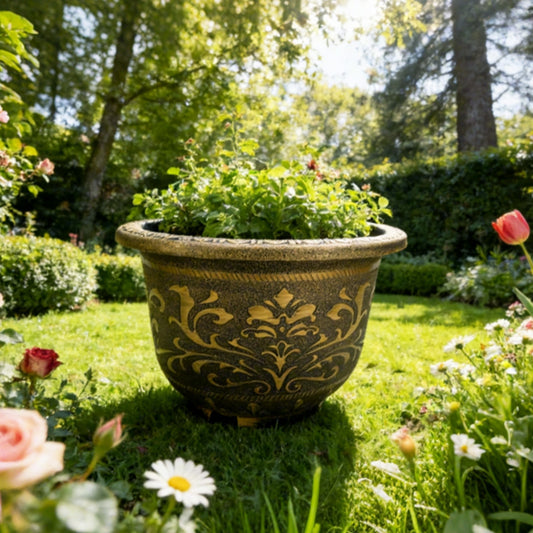
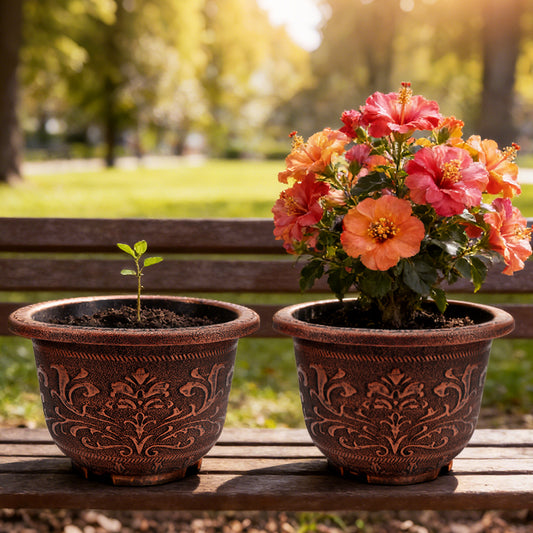
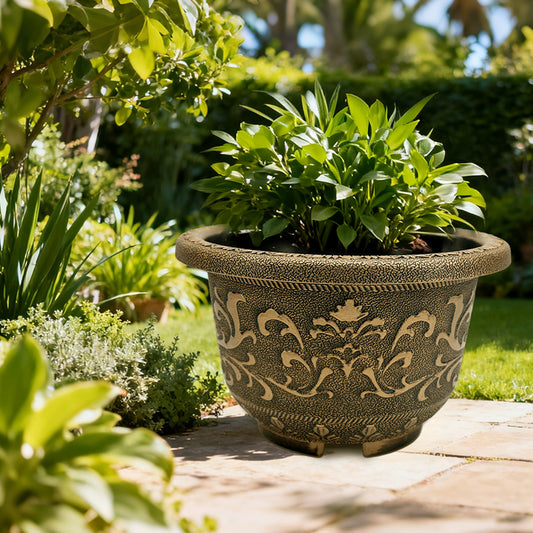
Collection: Front Porch Planters

The right front porch planters do more than hold soil - they frame your entryway, set the tone for your home, and deliver curb appeal that neighbors notice from the street. Whether you're looking for a single statement piece beside the door or a coordinated pair to flank your steps, this collection covers every style, size, and material you need to find porch pots that match your home and thrive through every season.

Types of Front Porch Planters

Front porch planters break down into four core styles, each creating a different visual effect and serving different porch layouts.

Urn Planters

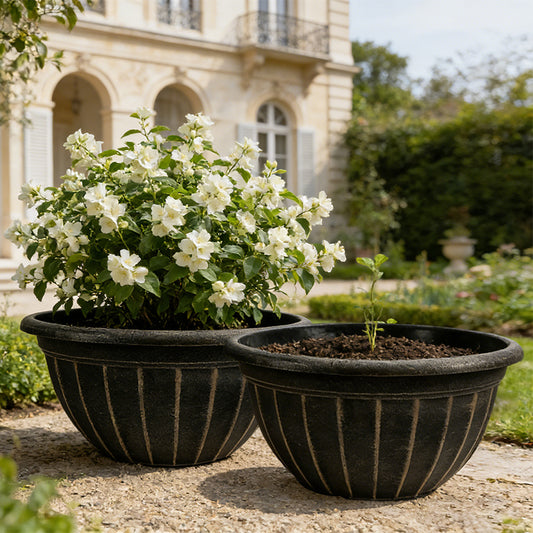
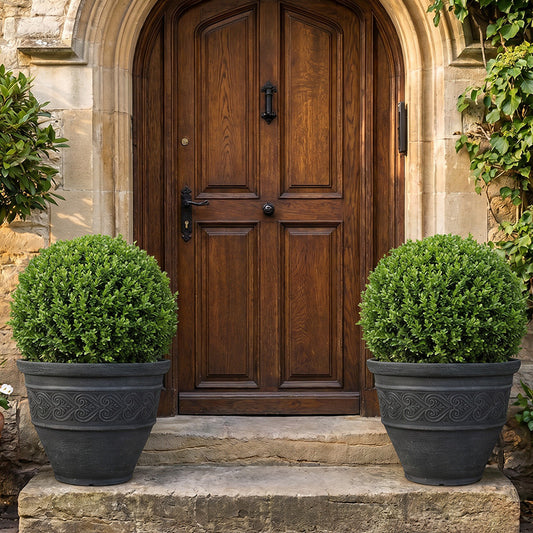
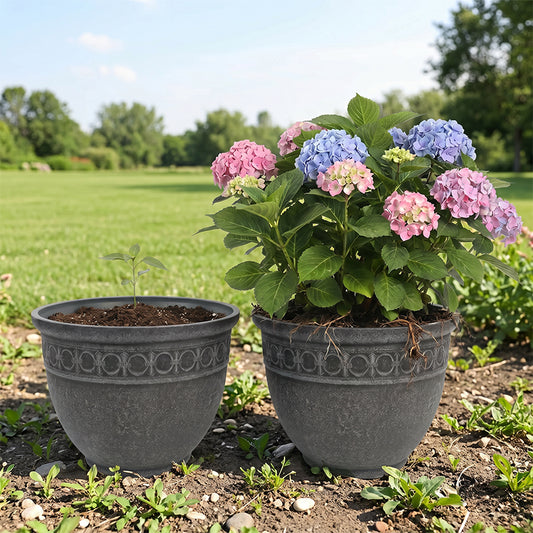
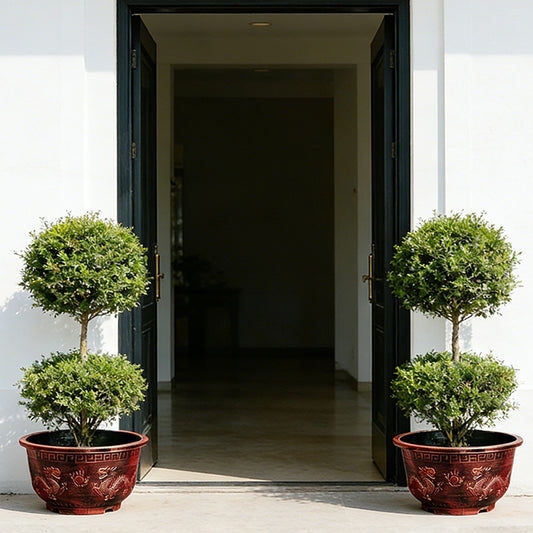
Urn pots carry a classic, pedestal-supported silhouette rooted in traditional garden design. They're the natural fit for Colonial, Tudor, and Georgian homes where symmetry matters. Using matching pots on either side of a door creates balance and an immediate sense of formality. Classic urn pots are made from 100% recycled resin, giving you that timeless stone look without the excessive weight. Black urn pots measure 15" tall and 13" wide - a versatile size for most entryways. Choose draping plants for a more expensive look in urn pots, letting trailing foliage soften the curved edges.

Rectangular Planters

Long and linear, rectangular pots work beautifully along porch railings, step edges, or beneath windows. Their shape lends itself to continuous ribbons of greenery - cascading spillers, compact herbs, or seasonal annuals planted in a row. They're especially effective for farmhouse, cottage, and modern aesthetics where clean horizontal lines add structure without visual clutter.

Square Planters

Cubic and grounded, square pots anchor corners, sit beside front door entries, and provide strong geometric contrast to organic plant forms. They're ideal for structured displays - topiaries, dwarf boxwoods, or the popular thriller-filler-spiller combination. Lattice design square pots measure 14.75" x 14.75", offering good soil volume in a compact footprint, while square lion's head pots measure 10.2" x 10.2" for smaller accent arrangements.

Tall Column Planters

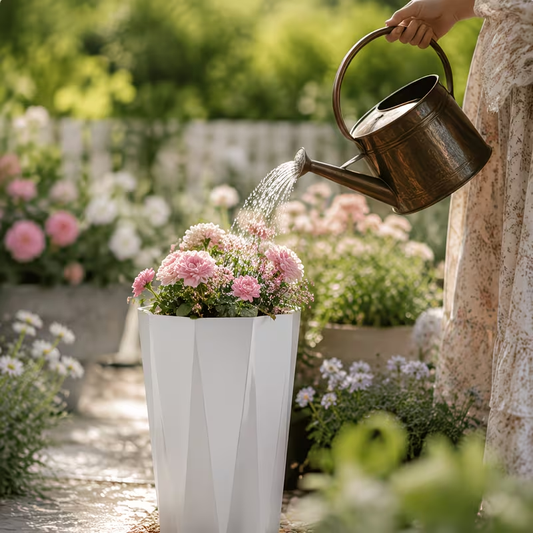
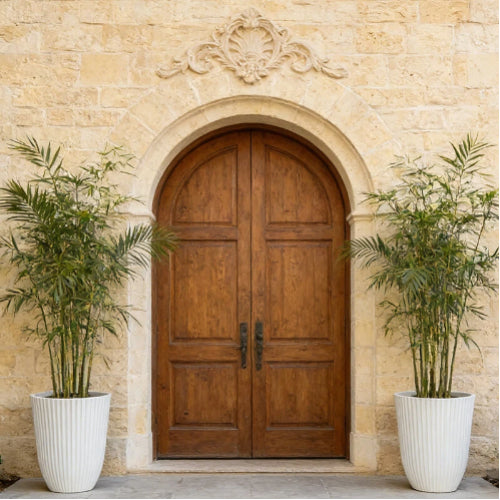
When you want height and drama, tall column potsdeliver. These vertical vessels flank doorways the way architectural columns do, drawing the eye upward and making entrances feel grand. Tall column pots can adjust to three different heights, so you can fine-tune proportions to your specific porch. Vertical elements in pots add depth and interest, especially when paired with upright grasses or single-stem topiaries. A set of two metal pots includes one that is 31" high - enough presence to frame even taller entryways.

What to Look For in Front Porch Planters

Not every planter survives a full year outdoors. Here are the details that separate pots worth the investment from ones you'll replace after a single season.

Weather Resistance

Your containers face UV exposure, rain, frost, and temperature swings - sometimes all in the same week. UV breaks down polymers and fades color over time, while freeze-thaw cycles cause water trapped in porous materials to expand roughly 9% in volume, cracking standard terracotta or unsealed concrete from the inside out. Look for UV-stabilized finishes and non-porous construction. Premium frost-proof polyresins and fiberglass containers handle zones 3 through 10 without damage. Choosing light-colored pots in hot areas prevents overheating, keeping root temperatures safer through summer.

Drainage Systems

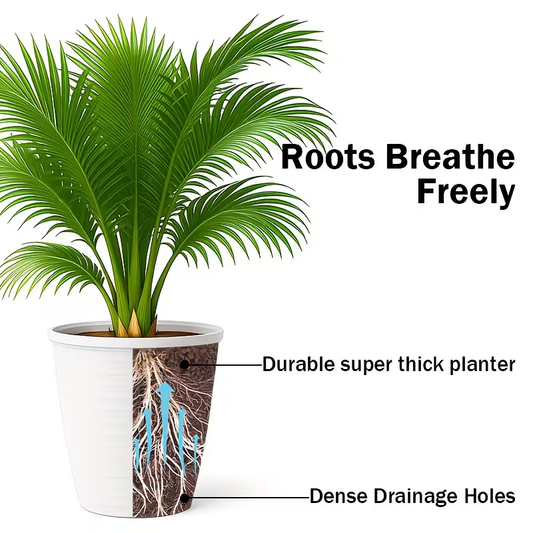
Containers should have drainage holes for healthy plant growth - it's that simple. Without them, water pools at the bottom, soil stays soggy, and roots rot within weeks. Good porch containers include drainage holes with removable plugs or built-in layering systems that control water retention. Elevating containers on feet or pads also matters: airflow beneath the base prevents moisture damage to your porch flooring and helps the planter itself last longer.

Size and Scale

containers should match the style of the home for cohesive design, and scale is a major part of that equation. A planter that's too small next to a tall door looks like an afterthought; one that's too wide blocks foot traffic. As a working guideline, containers flanking an entry should reach roughly one-half to two-thirds the height of your door's sidelights. Layered pots with different heights create a curated look on steps, turning a basic stairway into a styled entrance. For plant health, deeper containers suit shrubs and rooted perennials, while shallower profiles work well for annuals and trailing spillers.

Material Quality

Material choice affects weight, maintenance frequency, longevity, and environmental impact. Sustainable composites - recycled resin,plastic, fiberstone, and bio-composite blends - are the fastest-growing segment in outdoor pots for good reason. Fiberstone composites like Stonelite blend magnesium-based material with fiberglass mesh, with over 95% biodegradable component, delivering frost resistance with less manufacturing energy. Lighter materials like fiberglass (a 36-inch planter weighs roughly 25–35 lbs empty) are easier to move for seasonal rotation, while heavier cast stone provides thermal mass that buffers soil temperature - a real benefit for plant roots in extreme heat or cold.

How to Choose the Right Front Porch Planter

Narrowing down the right planter comes down to four practical decisions:

Porch size and layout - Measure your available space, including step width and ceiling height. A small, narrow porch favors slimmer tall containers or compact square pots. Larger porches can host symmetrical urn pairs or long rectangular containers along edges. containers can frame entryways and create focal points, but only if they leave clear walking paths.

Climate conditions - Match materials to your local weather. If you're in a region with hard freezes, choose non-porous, frost-proof materials and ensure drainage prevents trapped water. Coastal areas demand salt and corrosion resistance. Hot, arid climates call for UV-stable finishes and lighter pot colors that reflect heat.

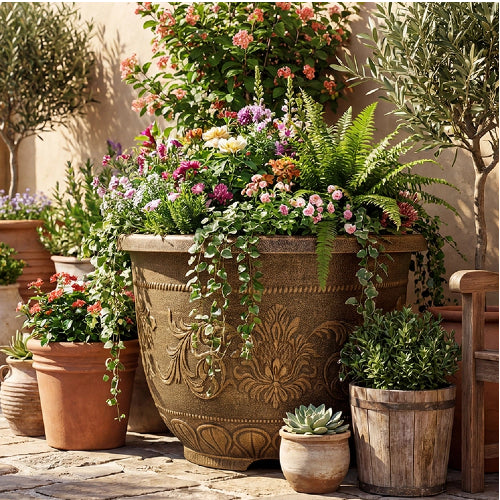
Plant selection - Successful porch pots require balancing sun exposure and plant choice. If you plan on deep-rooted shrubs or topiaries, you need soil depth; trailing annuals and spillers work in shallower containers. The "Thriller, Filler, and Spiller" method builds visual interest in containers - a tall focal plant, mid-height mass bloomers, and cascading edge plants. Plants should match local weather conditions and desired aesthetics.

Maintenance preferences - If you'd rather not seal, treat, or winterize each fall, invest in premium resin or fiberglass with UV-stable finishes. These materials need only occasional cleaning. If you enjoy seasonal swaps and hands-on gardening, lighter containers that are easy to move inside or rearrange give you flexibility year after year.

Frequently Asked Questions

What size front porch planters should I choose for my entryway?

Size your containers to your architecture. For flanking arrangements beside a door, aim for containers that reach about half to two-thirds the height of any sidelights, or roughly knee-to-waist height if there are no sidelights.

Do front porch planters need drainage holes?

Yes. Without drainage, water collects and creates soggy soil, root rot, and algae - problems that kill plants and can damage porch surfaces. If your planter doesn't have holes, drill them or use an interior liner with drainage over a gravel layer. Raised feet or built-in pads under the base add airflow, preventing moisture stains on wood or stone flooring.

What plants work best in front porch planters?

It depends on your porch exposure and climate. Full-sun porches do well with heat-tolerant varieties like lantana, portulaca, and vinca. Shaded entries suit impatiens, coleus, caladiums, and begonias. Evergreen shrubs can provide year-round beauty in containers - boxwoods thrive well both indoors and outdoors, making them a reliable stock choice. Low-maintenance plants include succulents and hardy evergreens for those who want green without constant attention. Seasonal rotation of plants keeps porch containers fresh year-round, and using plant food with macro and micro nutrients supports healthy growth through each season. For fall and winter, pansies, violas, and ornamental cabbages add color when summer annuals fade.

How do I protect front porch planters in winter?

Start with frost-proof materials - premium polyresins and fiberglass resist cracking even in hard freezes. Raise containers off cold ground to keep roots from chilling further. Drain excess water, remove spent annuals, and mulch the soil surface to insulate overwintering roots. In extremely cold zones, wrap vulnerable pots in burlap or move them inside. Avoid unsealed terracotta or non-rated concrete, which absorbs moisture and shatters when temperatures drop.

Shop Our Front Porch Planter Collection

Stylish porch planters can boost curb appeal while connecting your home to the natural world. Browse our front porch planter collection to find sustainable, beautifully crafted options - from recycled-resin urns to adjustable-height columns - designed to welcome every guest and weather every season. Share your porch setup or email us if you need help finding the right match for your entryway.


Fast Delivery

Customer Support

Free Shipping

Secure Payment